00 x 15 Yokohama Traction Tire Y720 trimmed
15 Inch Offroad Wheels - One of the wheels is usually a circular ingredient that is supposed to rotate by using an axle bearing. The wheel is one of the many aspects of the wheel and axle which are probably the six simple machines. Wheels, side by side with axles, allow heavy objects for being moved easily facilitating movement or transportation while supporting lots, or performing labor in machines. Wheels will also be employed for other purposes, possibly ship's wheel, tyre, potter's wheel and flywheel.Common examples are normally found in transport applications. A wheel greatly reduces friction by facilitating motion by rolling together while using axles. To enable wheels to rotate, a short time really should be applied to the wheel about its axis, either using gravity or by use of another external force or torque.The English word wheel originates from the Old English word hweol, hweogol, from Proto-Germanic *hwehwlan, *hwegwlan, from Proto-Indo-European *kwekwlo-, a long-term model of the generator *kwel- "to revolve, navigate ".Cognates within Indo-European include Icelandic hjól "wheel, tyre", Greek κύκλος kúklos, and Sanskrit chakra, aforementioned both meaning "circle" or "wheel ".Precursors of wheels, named "tournettes" or "slow wheels", were known in the Middle East by 5th millennium BCE (one of the first examples was discovered at Tepe Pardis, Iran, and dated to 5200–4700 BCE). These people were built from stone or clay and secured down having a peg within the center, but required effort to turn. True (freely-spinning) potter's wheels were apparently being used in Mesopotamia by 3500 BCE and maybe around 4000 BCE, plus the oldest surviving example, that was in Ur (modern day Iraq), dates to approximately 3100 BCE.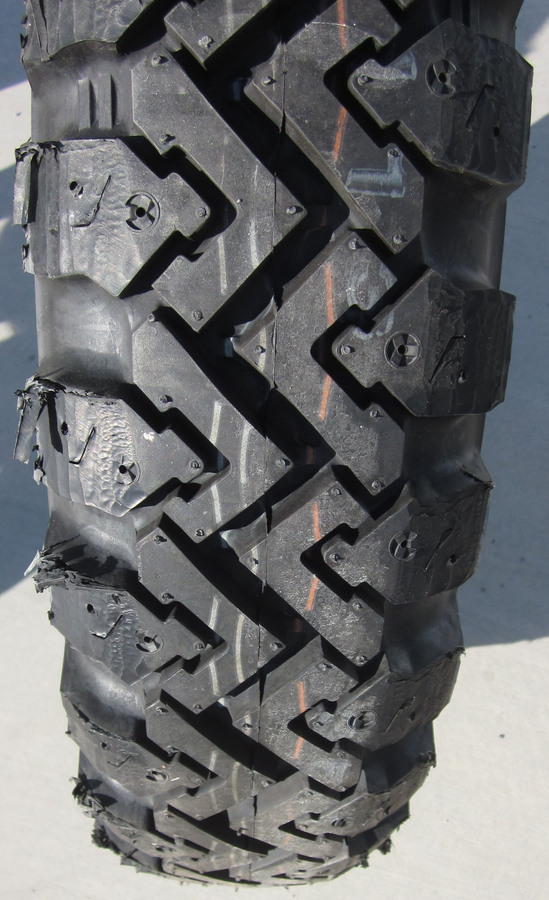

The best proof wheeled vehicles appears with the wife or husband in the 4th millennium BCE, near-simultaneously in Mesopotamia (Sumerian civilization), the Northern Caucasus (Maykop culture) and Central Europe (Cucuteni-Trypillian culture), to be sure the question which culture originally invented the wheeled vehicle remains unsolved.The initial well-dated depiction of your wheeled vehicle (here a wagon — four wheels, two axles) is on the Bronocice pot, a c. 3500 – 3350 BCE clay pot excavated in a very Funnelbeaker culture settlement in southern Poland.The oldest securely dated real wheel-axle combination, that from Stare Gmajne near Ljubljana in Slovenia (Ljubljana Marshes Wooden Wheel) happens to be dated in 2σ-limits to 3340–3030 BCE, the axle to 3360–3045 BCE.2 kinds of early Neolithic European wheel and axle are known; a circumalpine type of wagon construction (the wheel and axle rotate together, such as Ljubljana Marshes Wheel), and this of one's Baden culture in Hungary (axle is not going to rotate). They are both dated to c. 3200–3000 BCE.In China, the wheel was certainly present considering the adoption of this chariot in c. 1200 BCE,although Barbieri-Low[9] argues for earlier Chinese wheeled vehicles, c. 2000 BC.
Related Images with 00 x 15 Yokohama Traction Tire Y720 trimmed
PickupTruck.Com 2006 SEMA Show: Highlights and Wrap Up

Toyota Hilux with 20 Inch FUEL OFF Road Whels PUMP Matte Black

rims aluminum Great Lakes 4x4. The largest offroad forum in the

off road wheels ford ranger maverick d538 gallery fuel offroad wheels

| TITLE: | 00 x 15 Yokohama Traction Tire Y720 trimmed |
| IMAGE URL: | https://static.doghouserepair.com/images/products/2743002654.jpg |
| THUMBNAIL: | https://tse1.mm.bing.net/th?id=OIP.22g3f8SVaIT1IZJXM52OswC3Es&pid=Api&w=109&h=181 |
| IMAGE SIZE: | 162702 B Bs |
| IMAGE WIDTH: | 549 |
| IMAGE HEIGHT: | 900 |
| DOCUMENT ID: | OIP.22g3f8SVaIT1IZJXM52OswC3Es |
| MEDIA ID: | 23F2910E51C6B20E90CA5597FADBE39EF6F4F73E |
| SOURCE DOMAIN: | images.frompo.com |
| SOURCE URL: | http://images.frompo.com/i/15-inch-offroad-tire |
| THUMBNAIL WIDTH: | 109 |
| THUMBNAIL HEIGHT: | 181 |
Related Images with 00 x 15 Yokohama Traction Tire Y720 trimmed
PickupTruck.Com 2006 SEMA Show: Highlights and Wrap Up
Toyota Hilux with 20 Inch FUEL OFF Road Whels PUMP Matte Black
rims aluminum Great Lakes 4x4. The largest offroad forum in the
off road wheels ford ranger maverick d538 gallery fuel offroad wheels
Comments
Post a Comment