15x10 wheels and 31x10.5039;s Ford F150 Forum Community of Ford
15 Inch Offroad Wheels - A wheel is really a circular component that is supposed to rotate upon an axle bearing. The wheel is one of the many parts of the wheel and axle which are probably the six simple machines. Wheels, along with axles, allow heavy objects that they are moved easily facilitating movement or transportation while supporting lots, or performing labor in machines. Wheels are likewise used in other purposes, perhaps a ship's wheel, steering wheel, potter's wheel and flywheel.Common examples are simply in transport applications. A wheel greatly reduces friction by facilitating motion by rolling together fx axles. For wheels to rotate, a few minutes would need to be relevant to the wheel about its axis, either as a result of gravity or by the effective use of another external force or torque.The English word wheel proceeds from the Old English word hweol, hweogol, from Proto-Germanic *hwehwlan, *hwegwlan, from Proto-Indo-European *kwekwlo-, a lengthy mode of the foundation *kwel- "to revolve, navigate ".Cognates within Indo-European include Icelandic hjól "wheel, tyre", Greek κύκλος kúklos, and Sanskrit chakra, the second both meaning "circle" or "wheel ".Precursors of wheels, termed "tournettes" or "slow wheels", were known in your Middle East through 5th millennium BCE (one of the earliest examples was discovered at Tepe Pardis, Iran, and dated to 5200–4700 BCE). They were built from stone or clay and secured to the ground having peg during the center, but required effort to turn. True (freely-spinning) potter's wheels were apparently utilized in Mesopotamia by 3500 BCE and possibly around 4000 BCE, additionally,the oldest surviving example, that has been located in Ur (modern day Iraq), dates to approximately 3100 BCE.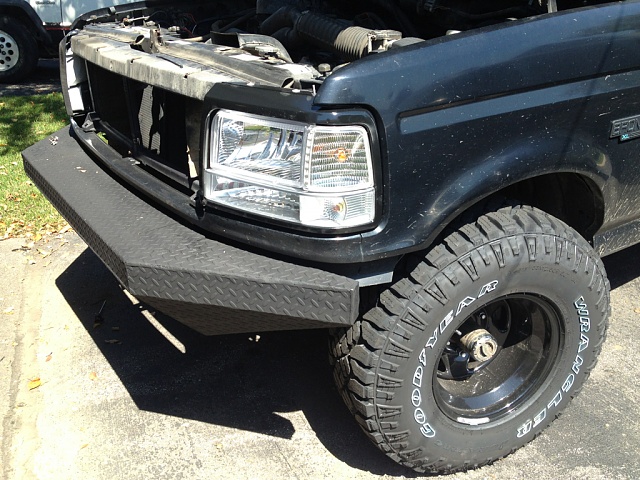

The very first evidence of wheeled vehicles appears inside the lover for the 4th millennium BCE, near-simultaneously in Mesopotamia (Sumerian civilization), the Northern Caucasus (Maykop culture) and Central Europe (Cucuteni-Trypillian culture), to ensure the question which culture originally invented the wheeled vehicle continues to unsolved.The initial well-dated depiction of an wheeled vehicle (here a wagon — four wheels, two axles) is about the Bronocice pot, a c. 3500 – 3350 BCE clay pot excavated in a very Funnelbeaker culture settlement in southern Poland.The oldest securely dated real wheel-axle combination, that from Stare Gmajne near Ljubljana in Slovenia (Ljubljana Marshes Wooden Wheel) is already dated in 2σ-limits to 3340–3030 BCE, the axle to 3360–3045 BCE.Two kinds of early Neolithic European wheel and axle are known; a circumalpine model of wagon construction (the wheel and axle rotate together, as in Ljubljana Marshes Wheel), and that belonging to the Baden culture in Hungary (axle just isn't going to rotate). They both are dated to c. 3200–3000 BCE.In China, the wheel was certainly present in the adoption of this chariot in c. 1200 BCE,although Barbieri-Low[9] argues for earlier Chinese wheeled vehicles, c. 2000 BC.
Related Images with 15x10 wheels and 31x10.5039;s Ford F150 Forum Community of Ford
WHEELS BY BOLT PATTERN 6x135 Bolt Pattern 20 Inch Wheels Grid OffRoad

Introduces Five New Sizes to Baja ATZp3 Tire Line OffRoad.com Blog

15 Inch Rims Custom 15quot; Wheel and Tire Packages at CARiD.com

Wheels 17quot; 16quot; 15quot; Buy 4x4 Suv Alloy Wheels,15 Inch Alloy Wh

| TITLE: | 15x10 wheels and 31x10.5039;s Ford F150 Forum Community of Ford |
| IMAGE URL: | https://www.f150forum.com/attachments/f10/134562d1344360065t-15x10-wheels-31x10-50s-image-3366450233.jpg |
| THUMBNAIL: | https://tse4.mm.bing.net/th?id=OIP.UU-gH9Zu6je76Jj4HWYLWwEgDY&pid=Api&w=239&h=181 |
| IMAGE SIZE: | 164227 B Bs |
| IMAGE WIDTH: | 640 |
| IMAGE HEIGHT: | 480 |
| DOCUMENT ID: | OIP.UU-gH9Zu6je76Jj4HWYLWwEgDY |
| MEDIA ID: | AC1B6BD7860C1C9231F9FFF90A23FC00AFF8FA66 |
| SOURCE DOMAIN: | f150forum.com |
| SOURCE URL: | http://www.f150forum.com/f10/15x10-wheels-31x10-50s-166520/ |
| THUMBNAIL WIDTH: | 239 |
| THUMBNAIL HEIGHT: | 181 |
Related Images with 15x10 wheels and 31x10.5039;s Ford F150 Forum Community of Ford
WHEELS BY BOLT PATTERN 6x135 Bolt Pattern 20 Inch Wheels Grid OffRoad
Introduces Five New Sizes to Baja ATZp3 Tire Line OffRoad.com Blog
15 Inch Rims Custom 15quot; Wheel and Tire Packages at CARiD.com
Wheels 17quot; 16quot; 15quot; Buy 4x4 Suv Alloy Wheels,15 Inch Alloy Wh
Comments
Post a Comment